
Lead magnet example
Needs assessment quiz
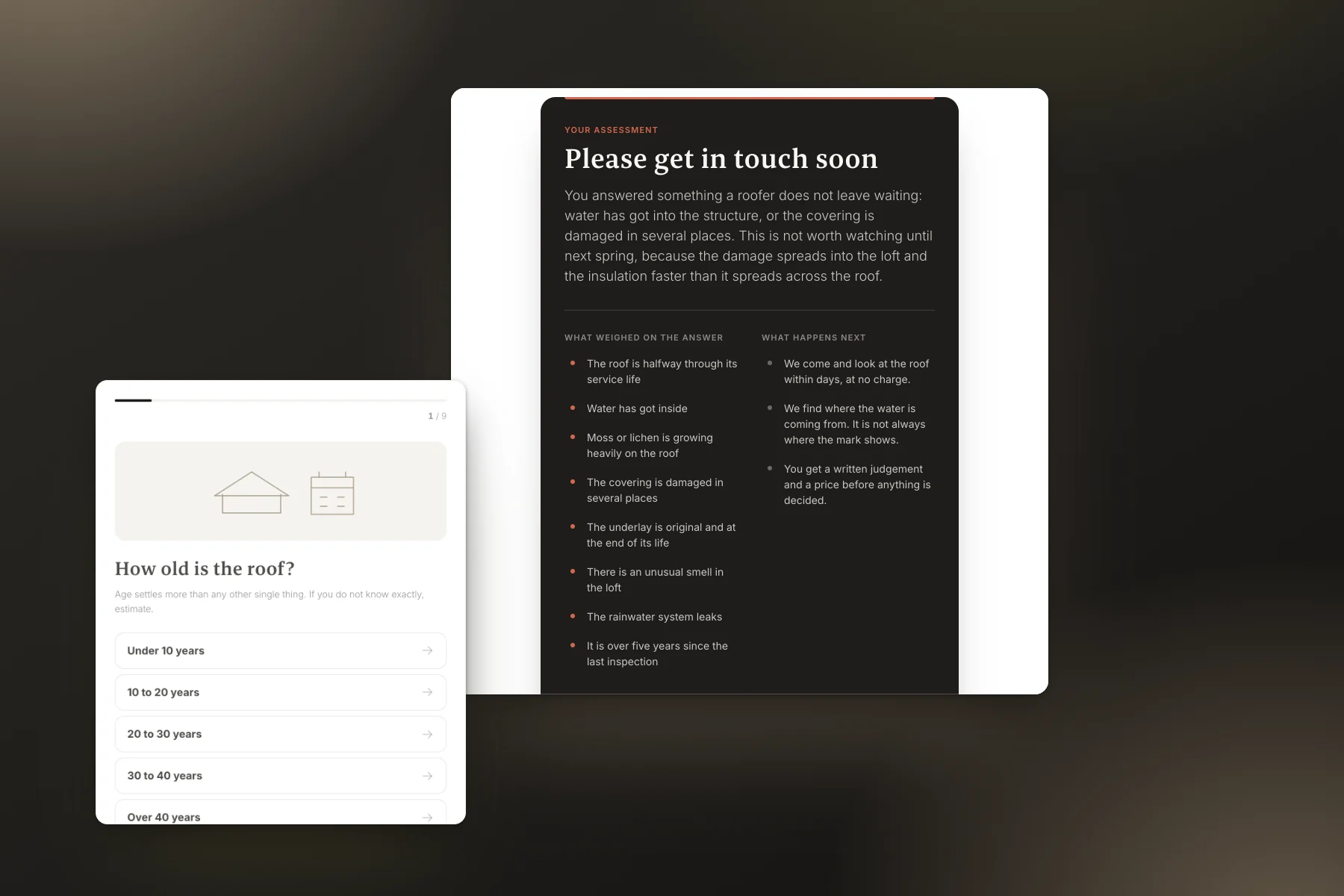
Which sore point it hits
Many people never get in touch because they do not know they have a problem. The roof is twenty years old, there is some moss on it, and they cannot say whether that is normal or a warning sign. Nobody asks that on the phone, because it feels like a stupid question, and because calling already feels like a commitment.
The quiz asks those things for them and gives an answer: does the roof need an inspection, and how soon. Only then is a visit offered, and by that point they have decided for themselves that it is worth having.
Why it produces leads
- It lowers the barrier decisively Answering a quiz does not feel like making contact. Details are asked for only once the answer has been given.
- The lead comes with its reasoning You see which answers raised the assessment, so you know what to look at first before you arrive.
- It sorts the urgent ones A leak or damp in the attic makes the answer urgent immediately. You can see who to visit first.
- It teaches the customer The respondent learns what actually matters in a roof. That makes the later quote conversation shorter.
- A good result sells too When the roof looks sound, a free inspection is still on offer for reassurance, and a familiar contractor for when the time comes.
- It works without a salesperson The quiz has the first conversation for you, evenings and weekends included.
- The leads land where you already work The tool can be wired into your CRM, so enquiries arrive in the system you run your sales from rather than in a mailbox where they get lost.
How it works
- The visitor answers nine questions They are the ones a fitter would ask on the phone: age, covering, leaks, moss, underlay, attic.
- The answers are weighted Every answer carries a weight, and some settle it on their own: water indoors is not a symptom, it is the answer.
- The visitor gets an assessment and the reasons Not general tips but an assessment of their roof, and a list of what fed into it.
- You get the booking and the answers By email, with every answer attached, so you know what you are going to look at.
Where it belongs on your site
- On the home page They do not know whether they have a problem, so they are not looking for a service page. The quiz starts the conversation before they have decided what they need.
- Inside the service page Where the signs and symptoms are listed. A reader does not have to guess whether the list is about them; they answer a few questions and get their own answer.
- On a landing page of its own The quiz works without the rest of the site: one address an ad leads to, where a visitor gets a read on their situation. That is where the cost per lead is measured.